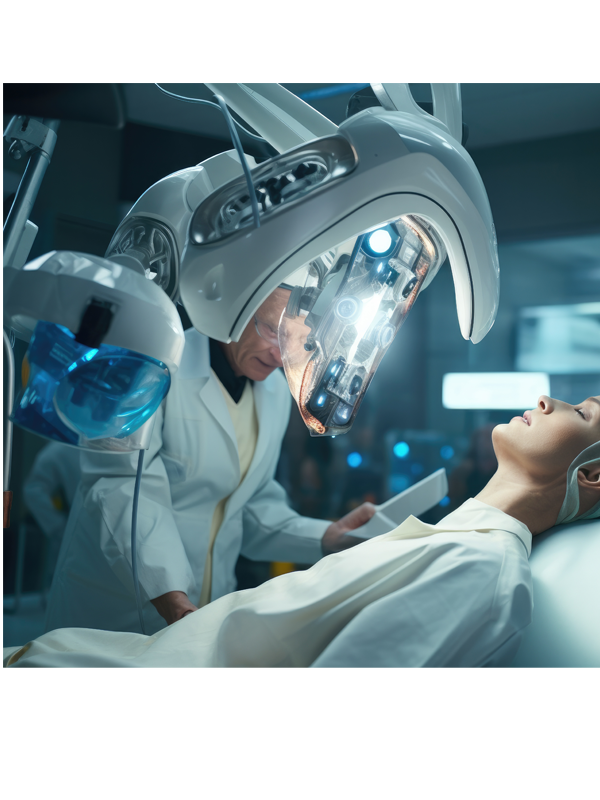
Blog-001 | Date: 16th Apr. 2026
Surgical AI Is Accurate — But Not Safe
Surgical AI Is Accurate — But Not Safe: The Missing Layer No One Is Talking About
The Illusion of Progress
Artificial Intelligence has entered the operating room with remarkable promise. We now have
systems that can detect tumors, guide surgical pathways, and predict complications.
But there is a critical assumption: Prediction equals safety.
This is flawed. Surgery is not just predictive. It is ethical, cognitive, and situational.
When Accuracy Fails
An AI may confidently identify a structure as non-critical. But a surgeon may hesitate due to subtle
cues.
AI does not hesitate. Humans do.
This is not a gap of intelligence, but reflexivity.
Intelligence Without Reflexivity
AI optimizes and predicts. But surgery requires slowing down, questioning, and uncertainty.
The safest decision is not always the most confident one.
The Missing Layer: Reflexivity
Surgeons reflect during procedures. AI does not.
This reflexivity integrates perception, cognition, uncertainty, and responsibility.
Toward Ethically Reflexive AI
We need AI that: - Detects uncertainty - Integrates ethical thresholds - Introduces controlled
hesitation - Adapts in real-time
This is ERIF.
Closing Thought
We have built systems that can think. Now we must build systems that can reflect.
Because the most dangerous decision is not the wrong one— but the unquestioned one.
Author: Dr. Piush Choudhry Founder, Ethically Reflexive AI in Surgery (ERIF)